Custom metal parts, coordinated in China
CNC machining & metal injection molding.
From a first sample to repeat production, bring your drawings, materials and quantities to one point of contact.
Project review and manufacturing coordination through partner factories in Dongguan, China.
Find the right route
for your part.
Start with the geometry, design stage and expected demand. Review the process around the finished requirement.
CNC machining
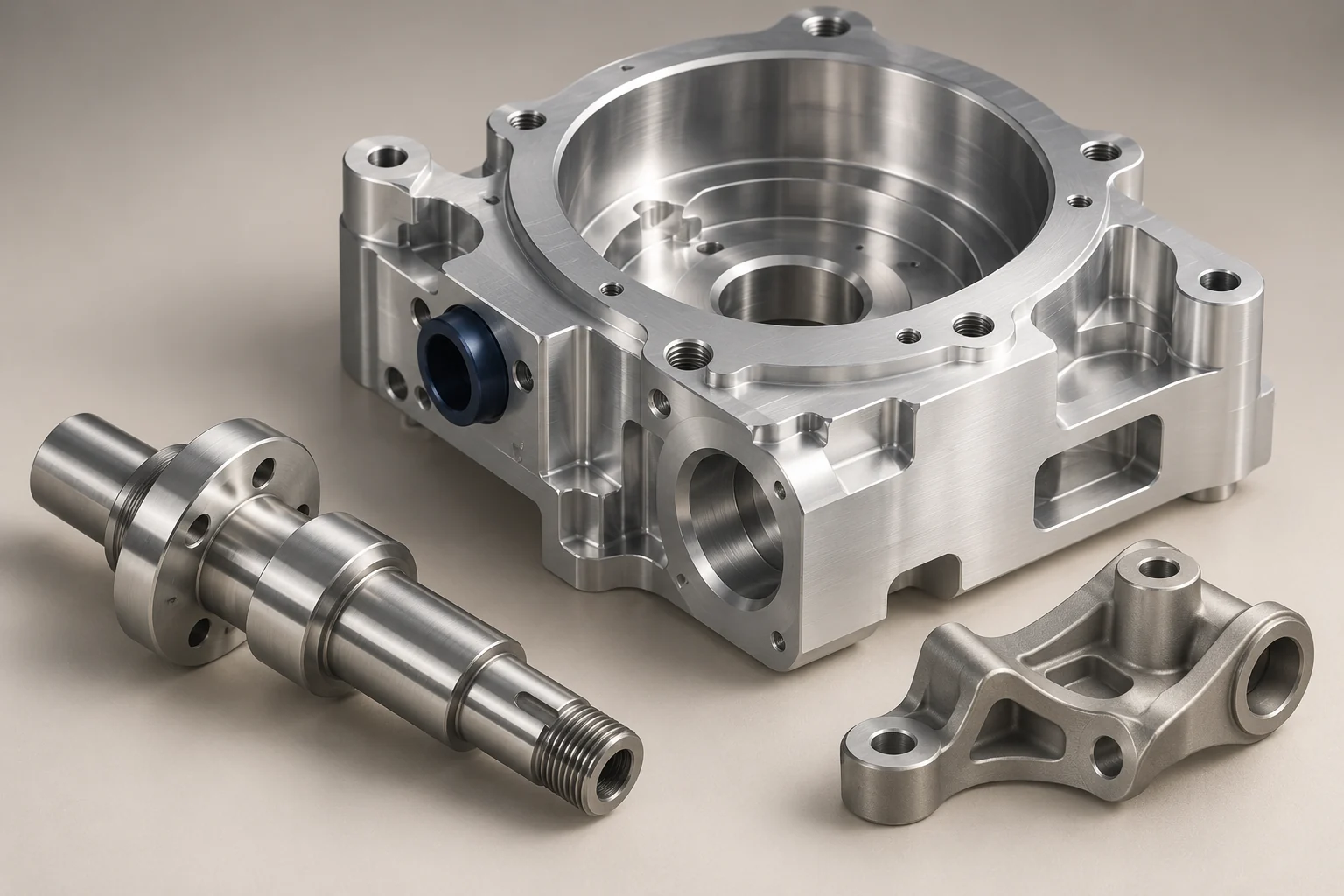
Milling and turning for housings, shafts, bushings and drawing-defined metal components.
- Project stage
- Engineering samples, pilot builds and repeat batches
- What to review
- Tool access, fits, material and surface finish
Metal injection molding
Project assessment for small, complex metal components intended for repeat production.
- Project stage
- Feasibility, tool development, sampling and approval
- What to review
- Geometry, material, demand and secondary operations
Still comparing CNC and MIM?
Read the process selection guideStart with your component.
Discuss a different componentAluminum enclosures
Pockets, connector openings, mounting features and mating surfaces.
View requirementsStainless steel shafts
Stepped diameters, threads, grooves and critical interfaces.
View requirementsBrass bushings
Custom sleeves and flanged components, specified around fit.
View requirementsThese sketches illustrate component types. Manufacturing feasibility is assessed from your drawing.
Define the material.
Then the manufacturing route.
Grade, finished condition and surface requirements help make the quotation useful.
Aluminum, stainless steel and brass
Specify the grade, critical surfaces and treatment requirements.
Explore material requirementsMIM material guide316L stainless steel
Include the service environment, finishing and verification requirements.
Review 316L for MIMMIM material guide17-4PH stainless steel
Define the required condition, heat treatment and final dimensions.
Review 17-4PH for MIMHave a drawing ready?
Send CAD + PDF, material, quantity and the details that matter to your part.
A drawing becomes
a manufacturing plan.
Each stage brings the open questions into focus before you commit to the next one.
Start a project reviewShare the requirements
Send your model, drawing, material and quantities. Highlight the features that matter to the assembly.
Review the manufacturing route
We coordinate feasibility questions with the relevant manufacturing source and clarify the project scope.
Agree the quotation and checks
Confirm the manufacturing scope, sample approval, inspection requirements and delivery terms.
Follow the approved project
Production, agreed checks and shipment preparation proceed against the confirmed requirements.
Define the details
before production.
Material, critical dimensions and inspection requirements belong in the first conversation. They guide what is quoted, checked and approved.
- Drawing revisionKeep the approved model, drawing and material specification together.
- Critical featuresIdentify the fits, threads and surfaces that determine function.
- Inspection scopeAgree the measurements and documentation required for the project.
- Sample approvalDefine what needs to be reviewed before repeat production.
Before you send
your drawing.
A few answers to help you prepare a useful project brief.
What files should I send?
A STEP or IGES model and a dimensioned PDF drawing are useful starting points. Include material, quantity, finish and the target date. If the design is still developing, send a non-confidential overview first.
Do I need to choose CNC or MIM first?
No. Share the geometry, material and expected demand. CNC is often considered for samples and smaller batches; MIM needs a project-specific assessment of tooling, material and repeat-production demand.
Are all parts produced in your own factory?
Partavon is a manufacturing coordination service working through project-specific discussions with manufacturing sources in China. We do not claim that every process is performed in one owned facility.
Can you confirm tolerances and lead times now?
The manufacturing source must review the drawing, material, quantity and inspection requirements first. Tolerances, timing and documentation are confirmed for the specific quotation.
What if my drawing is confidential?
Begin with a non-confidential overview and ask about the required confidentiality arrangements before attaching sensitive files.
Ready to review your part?
Share the drawing, material, quantity and the questions you need to resolve.